El Libro de Apolonio, al final en formato digital

Diciembre es el mes medieval aquí en Açedrex y estamos muy orgullosos de poder presentar a un rey que ha viajado desde lejos para estar aquí con nosotros en la era digital.
El Libro de Apolonio es la clásica aventura en el que un rey lo pierde todo y lo vuelve a recuperar a través de su generosidad, justicia y sabiduría. Es uno de los cuentos más populares de la Edad Media y cuando leas este texto encantador del mester de clerecía (siglo XIII), sabrás por qué.

El texto se basa en el del códice III-K-4 de la Biblioteca del Escorial y corregimos las variantes gráficas no significativas. Los cuartetos vienen numerados. Dividimos el poema en capítulos descriptivos y añadimos más de cincuenta notas que traducen las palabras que pueden ser difíciles para una experiencia lectora plenamente grata.

Además incluimos la Historia Apollonii Regis Tyri, el texto latino del siglo XII en que el Libro de Apolonio está basado. El texto latino se divide en los capítulos originales con un índice activo. Es la mejor edición digital que puedes comprar.

Está disponible ya en Nook y en Kindle (¡ahora también en amazon.es!) y pronto en otros formatos.

The Law in Thirteenth-Century Spain, Now in Paperback

December is going to be Açedrex’s medieval month, and I’m happy to start it off with the fulfillment of a promise I made in September: Law and Order in Medieval Spain is now available in paperback here, and soon in many, many other venues where your library or bookstore will be able to order it.

The print edition is improved over the digital version with accurate plate numbering and overall editing. I’ve made it as affordable as possible and hope you will enjoy it. It’s a very good looking book.

If you have written a treatise on medieval Spanish literature, in Spanish or in English, and would like to see your work in print, please submit.

Please see the first post for a complete description and information on how you can get a free pdf of this book if you were one of the three people who bought a digital copy. Yes, three people! That’s a bestseller for academic non-fiction!

La gran novela épica histórica de la Avellaneda

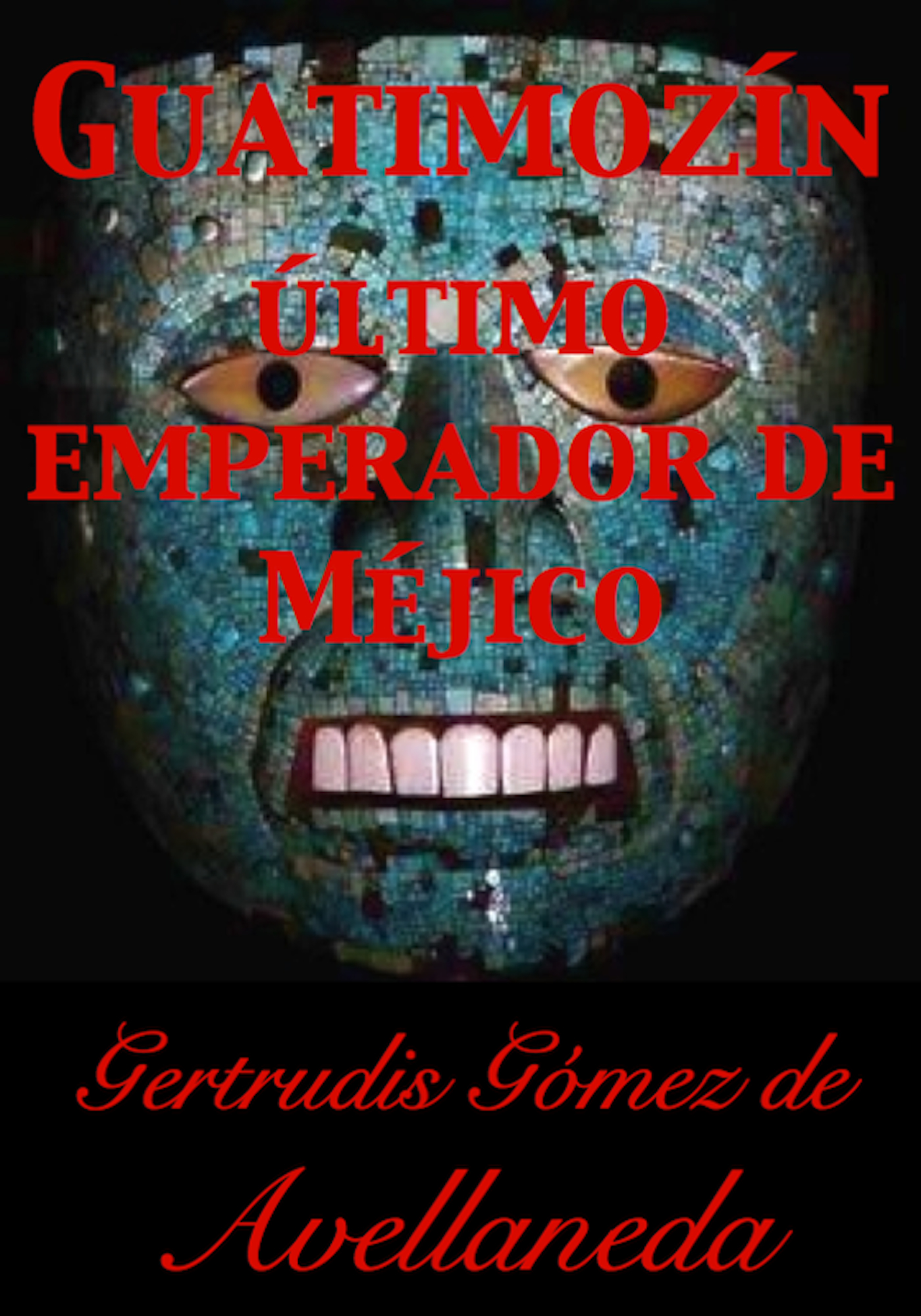
Guatimozín, último emperador de Méjico es la gran novela histórica de Gertrudis Gómez de Avellaneda. Normalmente, los libros de texto de historia terminan la época azteca con la muerte de Moctezuma. Este libro traza los últimos días de este “príncipe fiero” y también cuenta el último levantamiento bajo su sucesor, Guatimozín. Sé testigo de los últimos amores y pasiones del pueblo azteca mientras luchan a muerte por la tierra que le pertenece y que tan hondamente ama. Entiende las motivaciones de las mujeres aztecas y las intrigas de la corte antes y durante la estancia del mismo Hernán Cortés.

La importancia de este relato es que Avellaneda consigue reflejar las aspiraciones nacionales de la Cuba del siglo XIX a través del heroísmo de la época de la conquista de México. Anotó extensivamente su propia obra. Incluimos todas sus observaciones, investigaciones y citas en notas en formato cuidadosamente elaborado para la conveniencia del lector.

Nuestra edición cuenta también con un índice activo y la preservación de las intenciones de la autora. No existe otro texto más conveniente y fácil de leer. ¡Hemos vendido ejemplares de este libro popular antes de su debut!

Disponible ya para Kindle o Nook.

Cervantes’s Other Masterpiece in Español & English: Novelas ejemplares – Exemplary Novels

Continuamos nuestra serie verdaderamente bilingüe  — Español & English — con los cuentos más geniales del Siglo de Oro. Este libro está en el español original y en una traducción al inglés.

We continue our truly bilingual series, Español & English, with the most charming stories of the Spanish Golden Age. This book is in the original Spanish and an English translation.

Aunque Miguel de Cervantes las llama “ejemplares” o didácticas, estas novelas en realidad son cuentos de aventuras, de amores, de secretos e intrigas, de los bajos mundos y la más alta sociedad en Castilla, Andalucía, Italia e Inglaterra. La primera parte incluye todas las novelas ejemplares (también las que rara vez se imprimen en las ediciones modernas) en su orden original: La gitanilla, El amante liberal, Rinconete y Cortadillo, La española inglesa, El licenciado Vidriera, La fuerza de la sangre, El celoso estremeño, La ilustre fregona, Las dos doncellas, La señora Cornelia, El casamiento engañoso y El coloquio de los perros.

Puedes leerlas de un tirón o puedes hojear entre las versiones. Nuestra edición aporta un índice activo, todas las aprobaciones y los sonetos laudatorios, cada novela ejemplar, la traducción al inglés y muchas notas culturales en inglés para el lector curioso.

Although Miguel de Cervantes calls these stories “exemplary” or didactic, they’re really stories of adventure, love, secrets, intrigue, lowlifes and the high life in Castile, Andalusia, Italy and even England. The second part of this digital edition has each “novel” (even the ones that rarely appear in print) in the same order as the originals: The Little Gypsy Girl, The Generous Lover, Rinconete and Cortadillo, The Spanish English Lady, Dr. Glass-Case, The Force of Blood, The Jealous Estremaduran, The Illustrious Scullery Maid, The Two Damsels, The Lady Cornelia, The Deceitful Marriage, and the Dialogue of the Dogs.

Read them straight through, or flip between the Spanish and English versions. Our edition includes an interactive table of contents, the Spanish front matter, every story in both languages, the translator’s preface and Cervantes’s dedication and introduction, and extensive cultural notes in English.

¡Disponible ya! Available now! Kindle | Nook

The Last Days of Granada by One of the Most Popular English Writers of All Time

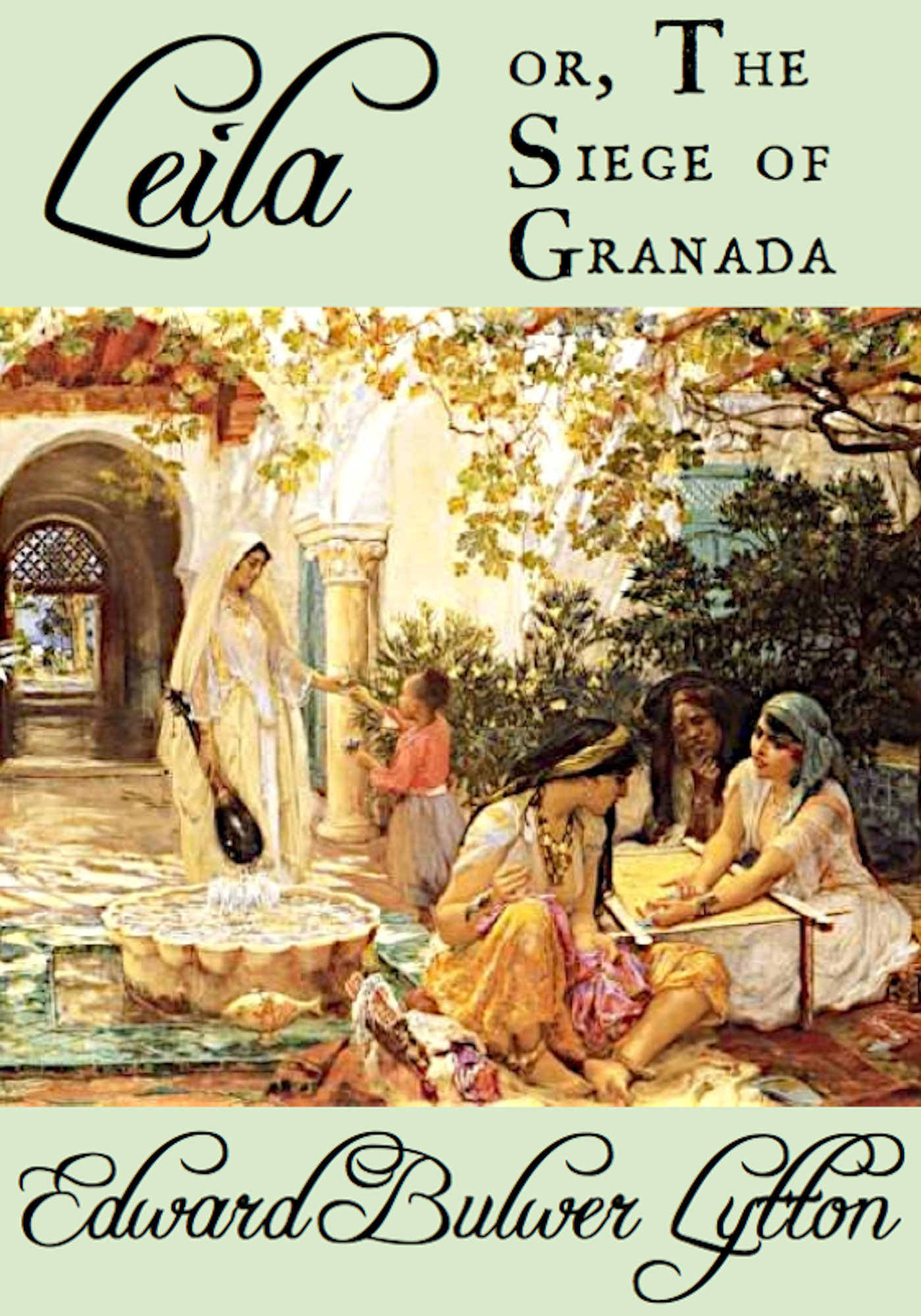
Leila, or The Siege of Granada by Edward Bulwer Lytton

From the same pen that brought us The Last Days of Pompeii and such unforgettable phrases as “the great unwashed,” “pursuit of the almighty dollar,” “the pen is mightier than the sword,” and the famous opening line “It was a dark and stormy night,” come these two feverishly romantic stories set in Golden Age Spain. Lytton was giving the public what it wanted and lived a life of renown, praise, riches, and some ribbing because of it.

Both books are well researched. While reading Edward Bulwer Lytton feels like a guilty pleasure, you might learn something, too.

Leila, Or The Siege of Granada takes place in late 1491, on the eve of the fall of the last Moorish stronghold in Spain, Granada. See the courtly intrigue and mighty battles from both sides — but mostly from the side of the defeated. It’s the side favored by the romantics, anyway. Witness Boabdil’s courageous last stand, and be there with him when he heaves the “last sigh” that is still commemorated at a vista toward the Alhambra today.

Calderon the Courtier tells the shorter tale of a forbidden love, deception, and betrayal at the court of King Felipe III.

This well-formatted edition includes an interactive table of contents and several explanatory footnotes from the first edition. Many original spelling errors have been corrected. This is, hands down, the cleanest edition of these works available.

Get these two amazing bargains in one volume in Kindle or in Nook.

Las cartas íntimas de la poetisa y novelista más creativa del Siglo XIX

Si ya has leído Sab, Dos mujeres, Espatolino, o su Autobiografía, sabes que Gertrudis Gómez de Avellaneda tiene un estilo todo suyo. Ahora puedes disfrutarlo en sus cartas más íntimas y en una novela histórica y muy romántica.

Las Cartas de amor de Gertrudis Gómez de Avellaneda trazan la relación de amor, de odio, y de amistad entre la poetisa y el hombre de su vida que nunca fue su marido, Ignacio Cepeda. Vemos claramente las pasiones y los deseos más profundos de la sensible creadora además de algunas de las reacciones de Cepeda, amables o frías según la circunstancia. Reproducimos aquí todas las cartas existentes de dos ediciones: la primera edición de su Autobiografía y el llamado Diario de amor, póstumos.

También se incluye La velada del helecho. Es una novela corta que tiene su origen en las tradiciones más arraigadas de la edad media europea. ¿Podrán estar juntos Ida y Arnoldo? Arnoldo dice que vendería su alma al diablo por el dinero necesario para convencer a la padre de Ida. ¿La llegada de un rico barón en la velada de San Juan le dará la oportunidad de realizar esta negociación nefasta?

Como todas las ediciones de Açedrex, ésta ha sido editada con esmero. Hemos evitado que se dupliquen las cartas. Cuenta con un índice activo para navegación fácil y muchas notas explicativas para la mejor experiencia lectora.

Disponible ya en Kindle y Nook.
                          También puedes considerar:   

More Spanish Travel by English and American Authors

As promised, Spanish Travels Volume 2 is now available!

As in the first volume, a lot of the value in this nineteenth-century travel writing lies in the unapologetic point of view. But this collection illustrates its value as a historical resource, too, with three charmingly lopsided sociological snapshots of Spain in the mid 1800’s and at the turn of the 20th century.

This edition includes a fully active Table of Contents and footnotes for easy navigation and 80 photographs and drawings in black and white, which can be enjoyed with an e-ink reader as easily as with a backlit one. If you’re familiar with modern Spain, you’ll marvel at the visual similarities and differences.

L. Higgin’s Spanish Life in Town and Country covers land, government, pop culture, the military, commerce, the condition of women and even delves into a personal account of the literature of the day, all in a friendly and insightful manner accompanied by stunning photos of people and places. If you ever need to quickly understand the context of a Galdós novel, this book will give you that, and a lot of gossip, too.

The Picturesque Antiquities of Spain is a collection of Nathaniel Armstrong Wells’s letters from Spain to a friend. The author never hesitates to wax poetic about Spain’s legendary past in the same breath that he complains about the freshness of the eggs at his hotel. His unyielding enthusiasm is that of a tourist, but this tourist has read up on his history and learned the language, if haphazardly. His frank bewilderment at some Spanish behavior makes him a comical guide through a country of stark contrasts.

William Dean Howells, a well known American novelist and critic in his time, caps the collection with Familiar Spanish Travels. As in his other writing, Howells shuns sentimentality, giving a blow-by-blow account of his travels, trains, and hotels, wryly commenting, “We were glad to go away from that dreadful place” and “we liked much better,” where appropriate. I can’t help but hold it against Howells that he makes the rookie mistake of comparing Córdoba in his time to its glamourous past or to other Andalusian cities, so that he’s quite disappointed. Otherwise, he includes entertaining vignettes about the quaint people he meets and the little boys he’s like to adopt and take back to America (in contrast to the scores of others he’s thrilled to leave behind). He rhapsodizes about the woman who finally fulfilled his dream to be told to “Go with God.” His sharp observations lead to poignant commentary on the contemporary society he’s observed in America and abroad.

A unique collection, not to be missed for fans of Spanish history, culture, and travel.

Now available in Nook and Kindle.

New Spanish Travel by English Writers

Açedrex is pleased to continue expanding our offerings in English on Spanish topics with a new two-book series.

I’ve always been a fan of nineteenth-century travel narratives in English. They make comparisons that reveal more about England or the US than they do about the country visited. They don’t avoid showing their awe or their disgust. They’re resolutely opinionated and unabashedly judgmental. In other words, their perspective makes the book.

In spite of all that, someone reading these narratives today can learn a lot about the Spain of the time: history, politics, customs, economic conditions and religious morality. This edition presents Castilian Days by John Hay and The Land of the Blessed Virgin by W. Somerset Maugham.

John Hay, lawyer, diplomat and journalist, served as Lincoln’s secretary and was US Secretary of State during the terms of McKinley and Theodore Roosevelt. He helped negotiate the treaty that ended the Spanish-American War. First published in 1875, Castilian Days contains his sharp observations of Spain, 1867-1868, when he was secretary of legation in Madrid. Hay’s no-nonsense reporting makes you feel you are discovering Spain right along with him.

W. Somerset Maugham was one of the most popular writers of his era and is known as one of the most significant travel writers of the time. Playwright, novelist, and short story writer, Maugham wrote his reflections on Spain during his literary travels there early in his career. The Land of the Blessed Virgin is a collection of wryly detailed essays on what the author saw and the people he knew in Andalusia. The prose — and the Spain it portrays — sparkles.

The edition includes the full text of both books and a convenient interactive table of contents. Spanish Travels Volume 2, available in October 2011, will contain more great prose from savvy travel writers and period photography and etchings.

Available in Kindle and Nook.

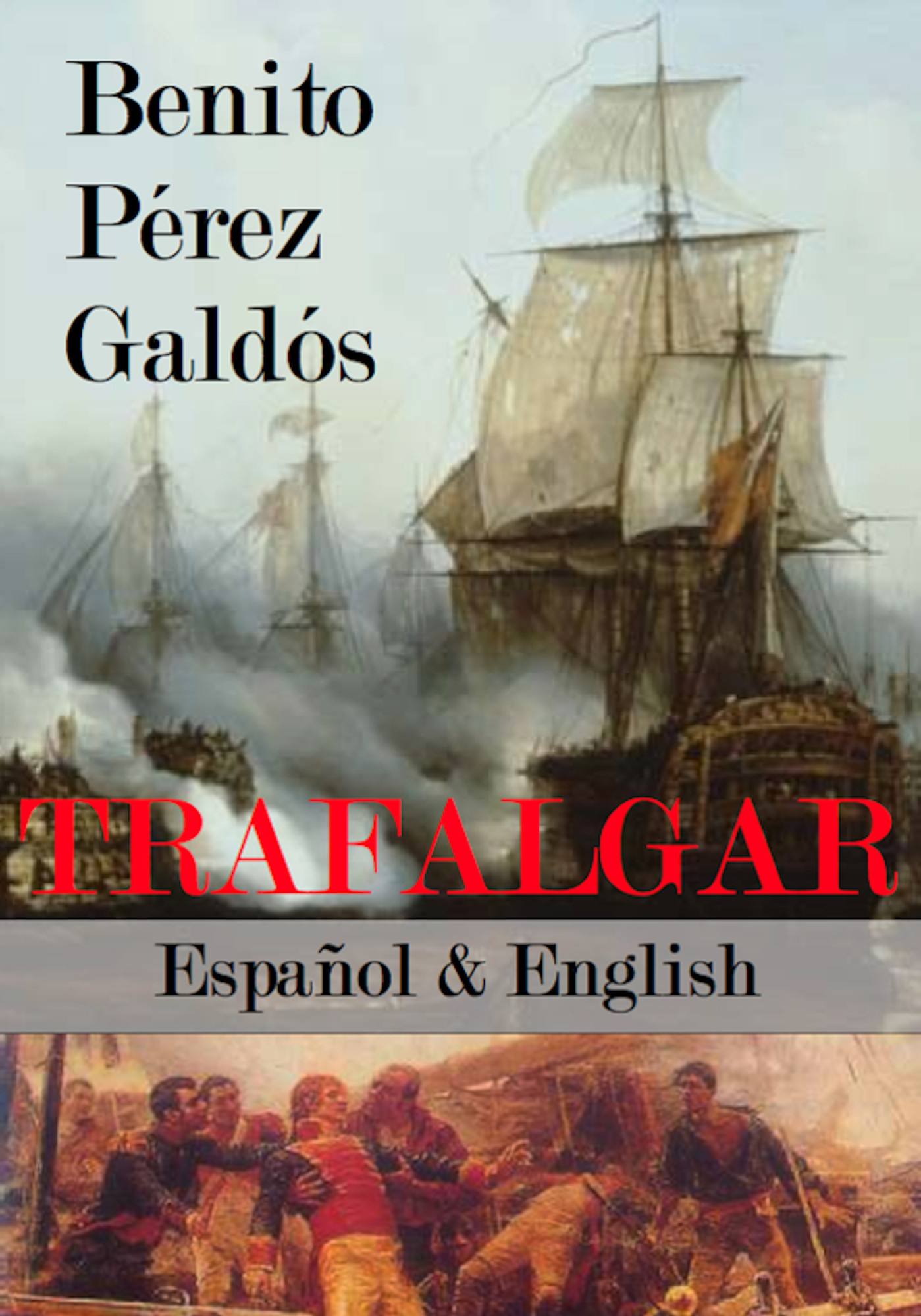
Primer título naval / First Naval Title: Trafalgar

Continuamos con nuestra nueva serie auténticamente bilingüe con un tributo a nuestro benefactor y ángel guardián, Tom Grundner, que falleció el pasado 11 de septiembre, y a quien le encantaban los buques históricos.

We continue our new truly bilingual series with a tribute to our benefactor and guardian angel, Tom Grundner, who suddenly passed away this September 11, and who loved historical ships.

¡En español! And in English!

«Gabriel, ¿eres tú hombre de valor?»

No supe al principio qué contestar, porque, a decir verdad, en mis catorce años de vida no se me había presentado aún ocasión de asombrar al mundo con ningún hecho heroico…

«Sí, mi amo: soy hombre de valor».


Conoces la historia de la derrota de la Batalla de Trafalgar. Esta novela te demostrará exactamente lo que pasó en los barcos y en el psyche españoles aquél fatídico 21 de octubre.
De la pluma magistral de Galdós nos viene este relato de un testigo presencial de la batalla naval que siempre después definió las fuerzas armadas tanto de Inglaterra como de España. Sé testigo de la derrota a través de los ojos de Gabriel, un huérfano con sólo 14 años que acompaña a su amo en el buque insignia de la Armada Española. Investigando el tema, el autor transcribió historias orales acerca de este momento importante. Escúchalas ahora como si los marineros te las contasen personalmente, describiendo los buque, las estrategias, los empeños desesperados de los tripulantes sin experiencia y, más importante, el costo humano.
Publicado en 1873, TRAFALGAR es el primer tomo de la primera serie de las Episodios Nacionales. La novela está llena de personajes auténticos que dan vida a la historia.
Esta edición incluye la versión original en español y una traducción revisada al inglés, con un índice activo que facilita la experiencia lectora.

 
“Gabriel, are you a brave man?” 

I did not know what to answer, for, to tell the truth, in my fourteen years of life no opportunity had ever presented itself…
“Yes, sir, I am a brave man.” 


You know the story of Nelson’s victory at Trafalgar. Have you ever wondered what happened on the Spanish decks – and to the Spanish psyche – on that fated October 21st?
From the masterful pen of Spain’s Charles Dickens comes this “eyewitness account” of the thrilling naval battle that defined both the English and the Spanish military forever afterward. Witness the disastrous defeat through the eyes of Gabriel, an orphan of only fourteen who follows his master onto the flagship of the Spanish Armada. As research for this novel, the author faithfully transcribed oral histories about this important moment in time. Hear them now as if one of the sailors were in the room with you, describing the ships, the strategies, the desperate efforts of inexperienced crew, and, most importantly, the human toll.
Published in Spanish in 1873, this is the first volume of Benito Pérez Galdós’s first set of ten novels in the “National Episodes” series. Now in a revised, corrected, and easy to read English translation, TRAFALGAR is full of authentic, opinionated characters who bring history alive.
This edition includes the complete original Spanish text and a revised and corrected translation into English with an interactive table of contents to make navigating between the versions as simple as possible.


¡Dos libros en uno! Two books in one! Kindle | Nook

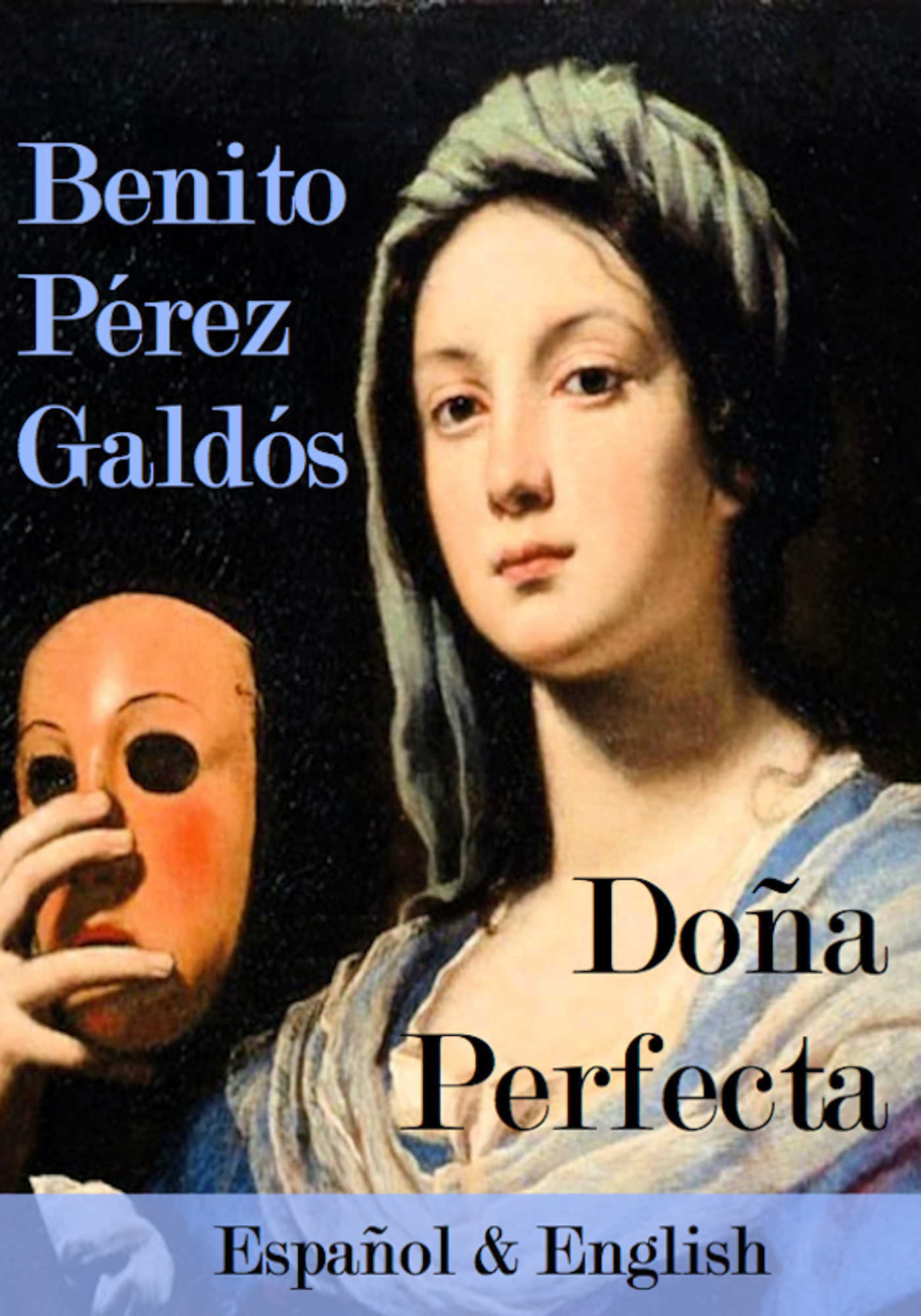
Nueva Serie Bilingüe / New Bilingual Series: Doña Perfecta

¡Este libro contiene la versión original en español y una traducción al inglés!

This book contains the original novel in Spanish as well as a complete English translation!

Doña Perfecta is the first book in a series that best defines the meaning of our bilingual publishing house. Read the Spanish, read the English, or read them both!

Pepe Rey, matemático y sobrino de Doña Perfecta viaja desde la urbe a Orbajosa para casarse con Rosario, su prima. Mete la pata de inmediato con Inocencio, el “penitenciario,” diciendo liberalidades. Le acusan de ateo. Perfecta no da ninguna libertad a Rosario porque no quiere que se casen, pero ya se han enamorado. Añade a esta tensión la llegada de las tropas, un abogado y planes para un secuestro entre los sentimentos de culpabilidad de una chica enamorada y tienes la melodramática y teatral trama de Doña Perfecta.

Los personajes de Galdós, psicológicamente verosímiles, están motivados por pasión en vez de ideologías. Tienden a ver el mundo a través de los cristales deformadores de sus prejuicios particulares, lo que es tan cierto de los personajes «buenos» como de los «malos». Se señalan los puntos de vista estrechos y conservadores de las pequeñas comunidades, su oscurantismo y prejuicios. Pero se describe la sociedad de Madrid como superficial y frívola. La rígida visión que tiene doña Perfecta de la religión triunfa sobre su reacción inmediata, de verdadero cariño, hacia Pepe, y distorsiona la opinión que tiene de él. El choque de prejuicios se convierte en un choque de personalidades a medida que avanza la novela, que termina de manera llena de suspense y sorpresas.

Nuestra edición digital incluye los textos completos y un índice activo para fácil navegación entre las versiones.

Debido a las ideas cambiantes del autor, existen por lo menos tres versiones del final del libro. Las dos versiones de esta edición corresponden al final B. La existencia de una variedad de finales agrega muchos colores más al caleidoscopio que es Doña Perfecta. Es muy recomendable que los busques.

Pepe Rey, a mathematician and nephew of Doña Perfecta, travels from the capital to Orbajosa to marry his cousin Rosario. He immediately makes social gaffes with Inocencio “the penitentiary,” discussing liberal policies. Pepe is accused of being an atheist. Perfecta does not want the marriage to take place and puts Rosario on lockdown, but the two have already fallen in love. Add to these tensions the arrival of the troops, a lawyer and plans to run away together amid the guilty feelings of a girl in love and you have the theatrical, thrilling plot of Doña Perfecta.

Galdós’s psychologically realistic characters are motivated by passion instead of ideology. The “good” ones as much as the “bad” ones tend to see the world through the deforming lenses of their own prejudices. The conservative, narrow points of view of small towns are highlighted, but Madrid society is described as superficial and frivolous. Doña Perfecta’s strict sense of religion triumphs over her first, sincere feelings of affection for Pepe and distorts her opinion of him. The clash of prejudices becomes a clash of personalities as the novel goes on, and ends in a suspenseful, surprising scene.

Our digital edition includes the complete texts and an interactive table of contents that make navigation between the versions simple. The English translation absorbs the final Spanish chapter into the second-to-last, probably because the original last chapter is so short.

Due to the author’s changing ideas, at least three versions of the ending exist. The two versions of this edition correspond to ending “B.” All these different endings add another splash of color to the kaleidoscope that is Doña Perfecta and it’s highly recommended to investigate them.

¡Los dos libros en uno! Two books in one: Kindle | Nook